
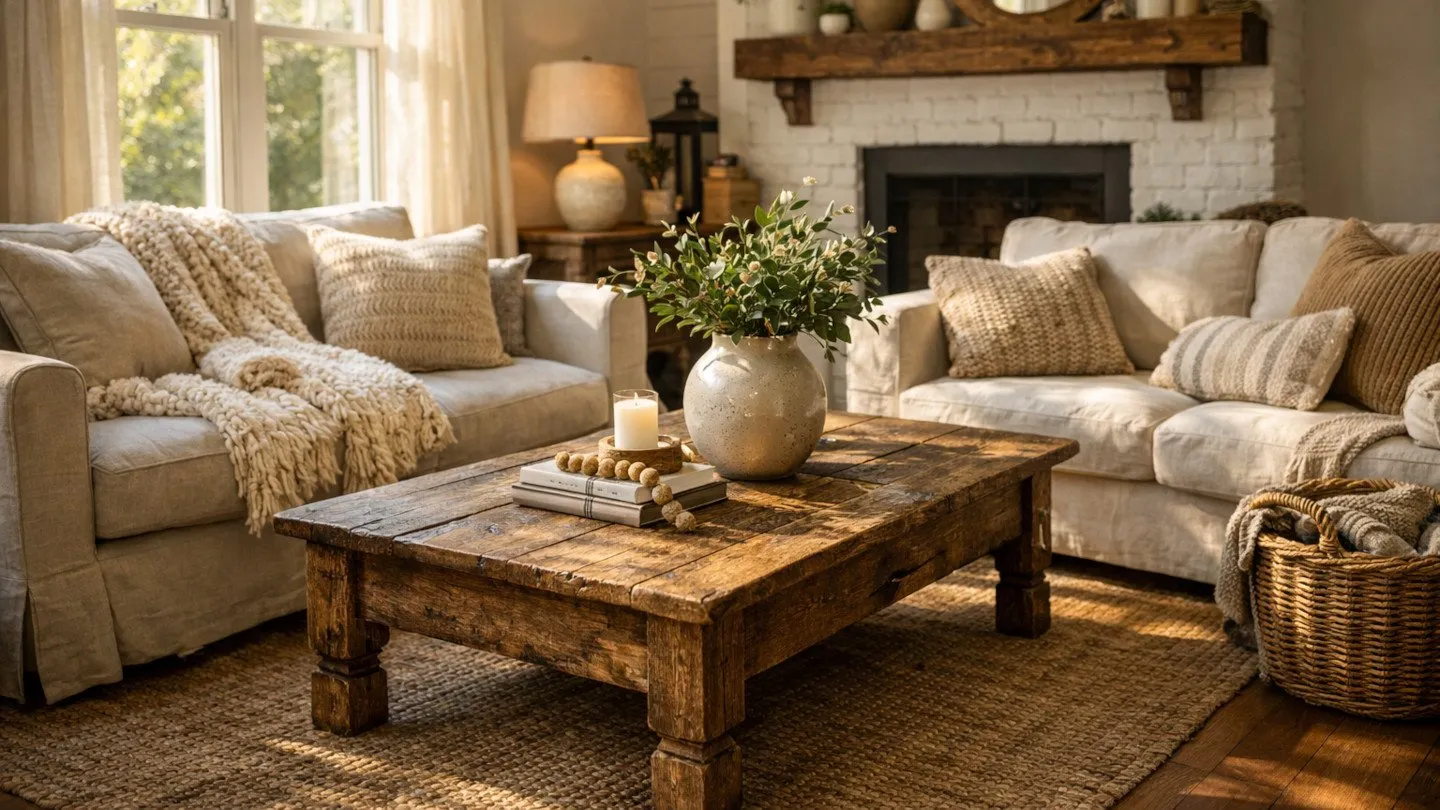
When people walk into my living room, they usually pause for a second before sitting down. It’s not because of the paint color. Honestly, I’ve repainted these walls more times than I can count, and that never made the biggest difference.
What actually changed the way this room feels came down to something much simpler, and something I overlooked for years: texture.
I didn’t fully understand that until one winter. The space looked “finished” on paper. Neutral palette, nice furniture, everything matched. But it still felt cold. Not temperature-wise, but emotionally.
It wasn’t until I swapped out a flat synthetic rug for a thick wool one and added a worn wood coffee table that the room finally settled. That’s when it clicked.
If your living room looks done but doesn’t feel right, there’s a good chance texture is what’s missing.
Key Takeaways
- Texture brings warmth, even when your color palette is simple
- I aim for 3 to 5 distinct materials in every living space
- Natural materials like wood, linen, and wool do most of the heavy lifting
- Contrast, not matching, is what makes a room feel balanced
- One well-chosen rug or throw can completely shift the atmosphere
- You don’t need more decor, you need better layering
Why Texture Matters More Than Color
I used to think color was everything. If a room felt off, I’d assume I picked the wrong shade and start over. But I’ve had beautifully painted rooms that still felt flat.
Texture is what changed that. It adds depth without demanding attention. A woven rug, a soft linen sofa, and a slightly rough wood surface are what make a space feel grounded. You may not immediately point them out, but you feel them the moment you walk in.
Texture works on two levels at once. You see the variation, and you experience the comfort. That combination is what makes people linger.
Pattern vs. Texture (And Why You Should Focus on Texture First)
I used to confuse these two all the time. Pattern is visual. Think stripes, florals, prints.
Texture is physical, or at least it looks like it could be. It has dimension and creates subtle shadows. It softens or sharpens a space depending on how you use it.
You can fill a room with patterns and still have it feel flat. I’ve done that before, and it never quite worked.
Now, I build a room around the texture first. Pattern, if I use it at all, comes later and stays secondary.
The Materials to Rely On (Layer by Layer)
I don’t decorate one piece at a time anymore. I think in layers. That shift alone made everything easier.
Soft Textiles: Where I Always Begin
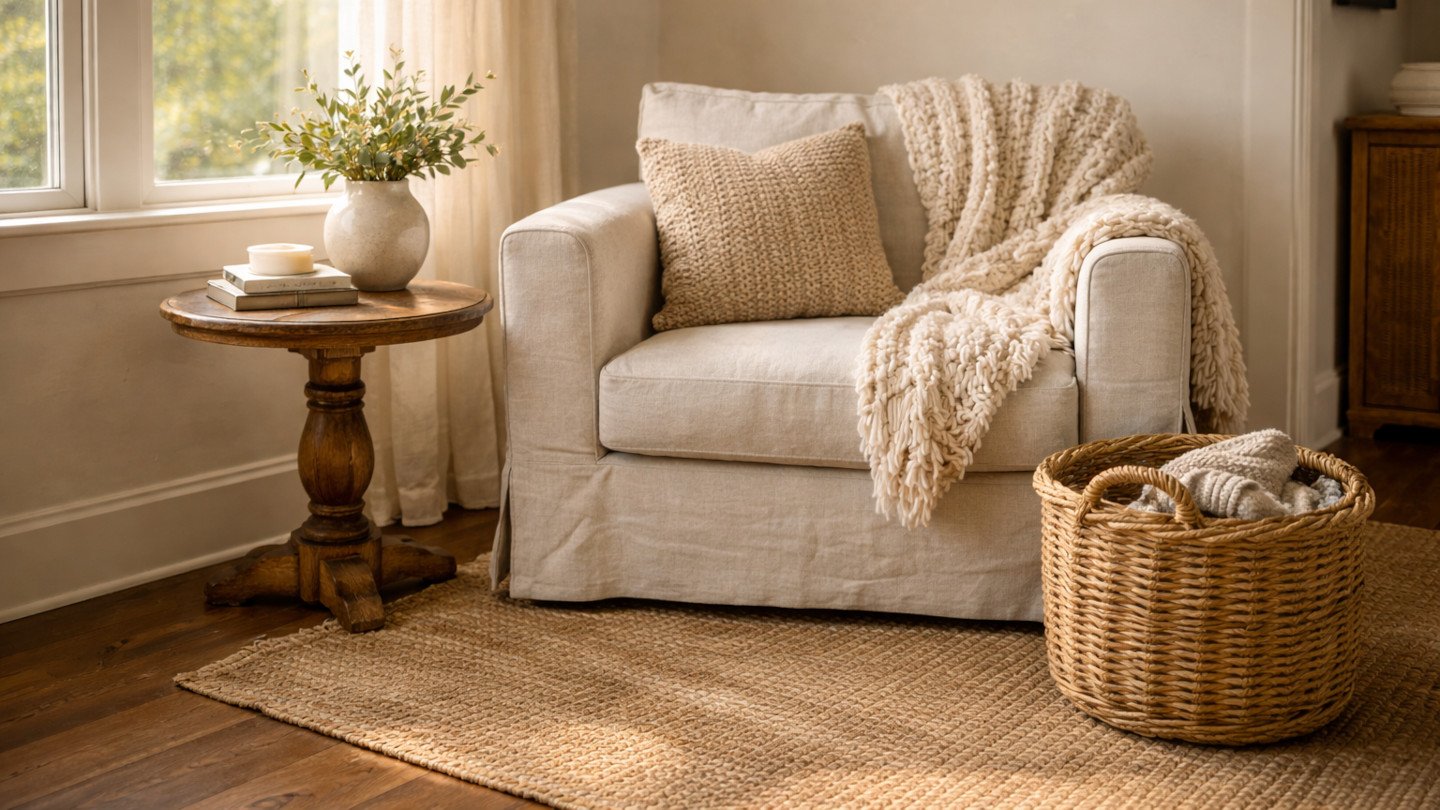
This is the foundation of comfort in my living room. Right now, I have a mix of linen upholstery, a couple of wool throws, and pillows that don’t all match, but they work together. Some are smoother, some have more weave, and that difference matters.
If everything feels the same to the touch, the room won’t feel finished. You need variation, even within soft materials.
Natural Fiber Rugs: The Piece Most People Get Wrong
If a room feels off and you can’t figure out why, look down.
I’ve lost count of how many times the rug was the problem.
In my own space, switching to natural fibers like wool or jute made an immediate difference. The room felt warmer, more grounded, and less staged.
Sometimes I even layer rugs, especially in larger seating areas. It adds depth without adding clutter.
Wood: The Element That Anchors Everything
In a farmhouse, wood does more than just fill space. It gives the room weight. I always look for pieces with visible grain, a bit of wear, and warmer tones. Perfect finishes can actually make a room feel less inviting.
One of my favorite pieces is a slightly worn coffee table that shows its age in the best way. It’s not flawless, but that’s exactly why it works.
Stone, Clay, and Ceramic: Small but Important
You don’t need many of these materials, but without them, a room can feel too soft. A ceramic vase, a clay planter, or even a stone accent introduces contrast. It breaks up all the softness and gives your eye somewhere to rest.
If you have a brick or stone fireplace, especially in older Atlanta homes, let it lead. Don’t compete with it. Build around it.
Metal Accents: Use Them Sparingly
Metal has its place, but too much shine can take away from that relaxed farmhouse feel. I stick with matte or aged finishes. You’ll see them in light fixtures, picture frames, or small decorative pieces around my home.
It’s just enough to add structure without pulling attention away from the softer elements.
How to Layer Textures Without Making the Room Feel Busy
It’s easy to go too far. What starts as a cozy idea can quickly turn into a space that feels crowded instead of comfortable.
Here’s what works better.
Work in Small Combinations
Instead of layering everything at once, focus on small groupings. In most cases, three textures in one area are enough to create depth without overwhelming the space.
Mix Bold and Subtle
Pair a chunky knit throw with a smoother pillow rather than combining multiple heavy textures that compete for attention. Contrast is what creates balance.
Keep the Base Calm
A neutral foundation gives you more freedom to layer textures without making the room feel busy. It keeps everything grounded. If you’re trying to simplify your space overall, I’ve found that applying a few principles from minimalist living made practical helps you layer textures more intentionally without slipping into clutter.
Leave Some Space Empty
Not every surface needs something on it. Let certain areas breathe. That negative space is what allows your textures to stand out and feel intentional.
A Simple Coffee Table Setup I Always Go Back To
Whenever I feel stuck, I reset with this:
- One natural element (wood or a plant)
- One soft element (books or fabric)
- One solid piece (ceramic or glass)
- One living touch (greenery or flowers)
It’s simple, but it always works because it hits multiple textures in one small area.
How Living in Season Changes Shaped My Approach
Winter can feel crisp, especially in the mornings, while summer brings a kind of humidity that changes how everything feels indoors. Because of that, I adjust textures throughout the year.
In cooler months, I lean into heavier layers. Wool throws, thicker fabrics, and deeper textures make the room feel warmer.
By summer, everything shifts. Linen, cotton, lighter weaves. The room still feels cozy, just not heavy.
In neighborhoods like Inman Park or Decatur, you’ll see this balance done well. Homes feel lived-in and layered, but never weighed down.
That’s always the goal.
Common Mistakes That Can Ruin the Cozy Feel
I’ve made all of these at some point.
Cheap throws don’t make a room cozier. They usually make it look unfinished.
When a room feels flat, it’s often the rug. Not the furniture, not the paint. The rug.
Texture shouldn’t stop at furniture. Walls, ceilings, and even small details matter more than you think.
And nothing replaces real character. Vintage pieces bring a kind of depth you just can’t replicate with something brand new.
Frequently Asked Questions
How many textures should you use in a living room?
I usually work with four or five main textures. That’s enough to create depth without overwhelming the space.
Can you layer textures in a small living room?
Yes, and it often helps more in smaller spaces. Just lean toward lighter materials so it doesn’t feel crowded.
What’s the easiest way to start?
Start with a rug or a throw. Those two changes alone can completely shift how your room feels.
Do textures need to match?
No, but they should relate. Similar tones or natural materials help tie everything together.
How do you know when your living room is done?
Take a photo. If it looks flat, add texture. If it feels busy, remove something.
What Finally Made My Living Room Feel Like Home
For a long time, I thought I needed better furniture or a new color scheme. What I actually needed was contrast. Soft next to rough. Light against weight. Smooth, balanced with something worn.
That’s what made the difference.
Your living room doesn’t need more things. It needs the right mix of materials, layered in a way that feels natural. Comfort isn’t just about how a room looks. It’s also about how well your home works day-to-day. Even small disruptions, like a broken appliance, can throw off that feeling, which is why having reliable help when you need it makes all the difference. I’ve come to rely on services like 911 Appliance EMT for that peace of mind.
Start small. Change one piece. Pay attention to how the room feels afterward.
Once you notice the shift, you won’t unsee it.


