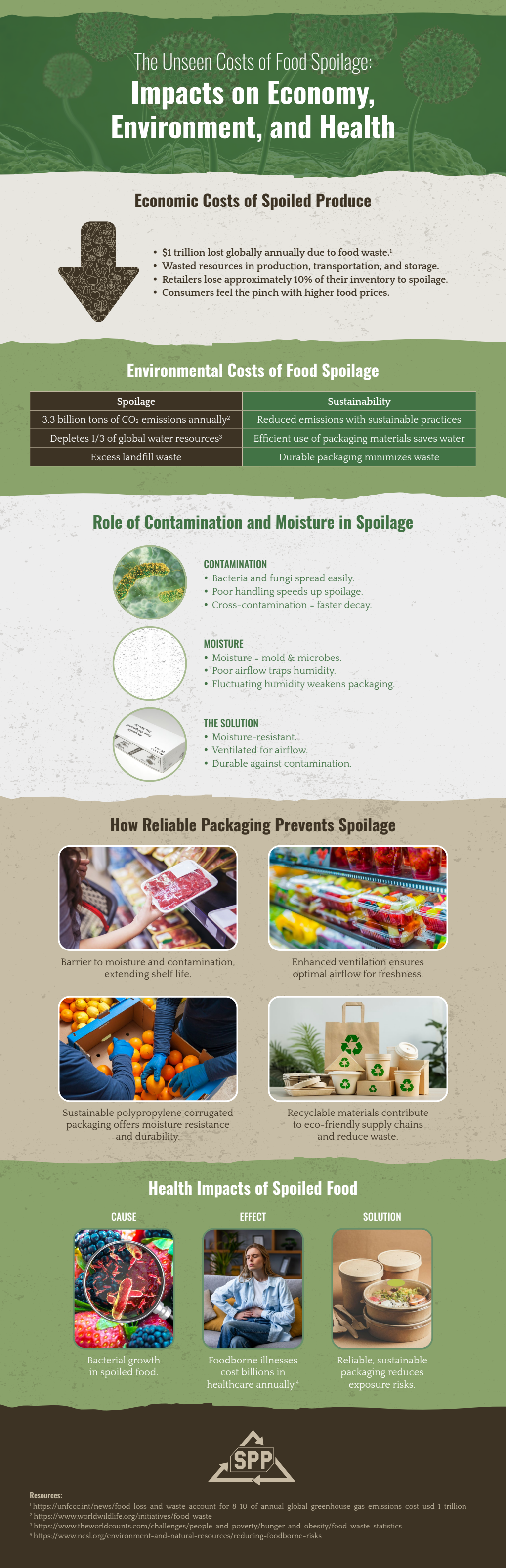

Food spoilage is often treated as a minor household inconvenience. A forgotten container in the fridge or produce that spoils too quickly usually ends up in the trash without much thought. Over time, however, food spoilage carries hidden costs that affect finances, health, and the environment in ways that extend far beyond the kitchen.
The Financial Impact Adds Up
Spoiled food represents wasted money. Groceries that are thrown away still required spending on production, transportation, and storage. Small losses each week quietly accumulate over months, increasing household food costs without improving nutrition or convenience.
Frequent spoilage may also encourage more shopping trips, leading to impulse purchases and additional waste. Planning meals, rotating pantry items, and storing food correctly help limit these losses.
Health and Safety Concerns
Food that spoils can pose health risks if consumed accidentally. Bacteria and mold growth increase the chance of foodborne illness, especially when spoilage is not obvious. Even minor exposure can cause digestive discomfort or more serious reactions in sensitive individuals.
Improper storage also raises the risk of cross contamination. Spoiled items can affect nearby foods, increasing waste and health concerns.
Environmental Consequences
When food is discarded, the resources used to grow, process, and transport it are wasted as well. Food waste contributes to landfill volume, where it releases methane during decomposition. This gas has a strong impact on climate conditions.
Packaging waste compounds the issue. Food containers and wraps often end up discarded alongside spoiled items. Some manufacturers work with a plastic packaging company to improve shelf life and reduce waste, yet proper storage and timely use remain critical at the household level.
Food spoilage rarely announces itself as a serious issue, yet its effects ripple through finances, health, and environmental responsibility. By paying attention to storage habits and consumption patterns, households can reduce waste. Check out the infographic below to learn more.