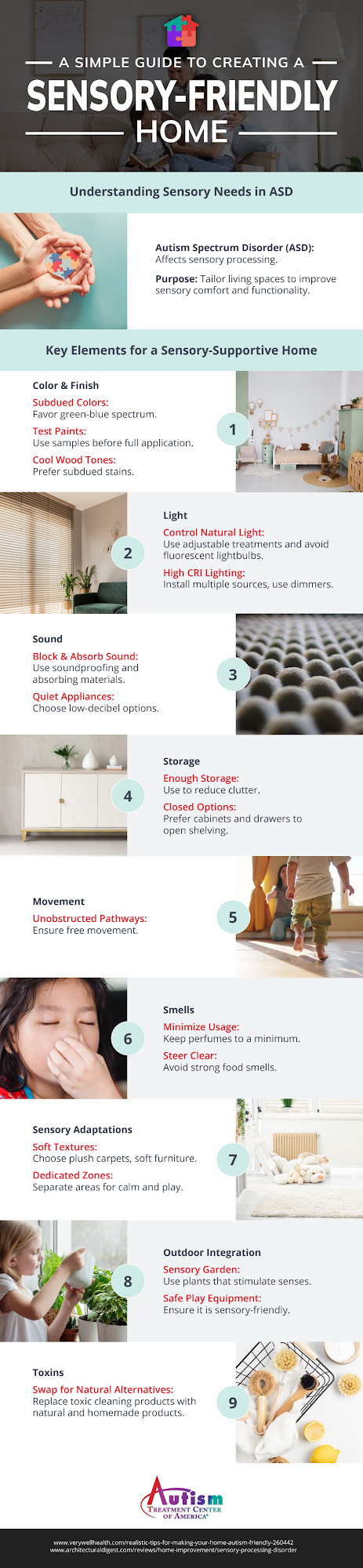
Individuals with autism spectrum disorder (ASD) often experience heightened sensitivity or diminished responsiveness to sensory stimuli. This can significantly impact their daily lives and overall well-being. However, you can significantly improve the quality of life for individuals with ASD by creating an environment that considers these factors.
Understanding Sensory Needs
Individuals with ASD may have heightened sensitivity to sounds, sights, smells, tastes, or textures. These sensory differences can lead to anxiety and behavioral challenges. Everyone is different though. Private autism services can provide a more personalized explanation for your loved one’s sensory needs.
Key Elements for a Sensory-Supportive Home
Sound
Minimize noise pollution by using soundproofing materials and opting for quiet appliances. Consider using white noise machines or fans to mask external sounds.
Light
Control natural light by using adjustable window treatments. Avoid fluorescent lightbulbs, as they can be visually stimulating. Instead, opt for high-CRI lighting with multiple sources and dimmers to provide a more customizable lighting environment.
Color and Finish
Opt for subdued colors, especially within the green-blue spectrum, as they tend to be less visually stimulating. Consider using cool wood tones for furniture and fixtures, as they can create a more calming atmosphere.

Smells
Minimize the use of strong perfumes or air fresheners, as these can be overwhelming for individuals with sensory sensitivities. Avoid cooking strong-smelling foods, especially when the individual is sensitive to odors.
Outdoor Integration
Create a sensory-friendly outdoor space by incorporating plants that stimulate the senses. Ensure that any play equipment is safe and appropriate for individuals with sensory differences.
Summary
By implementing these some of these strategies, you can create a home environment that is comfortable and supportive for individuals with autism. A sensory-friendly home can significantly improve quality of life, reduce stress, and promote overall well-being. To understand further, check out the infographic below.