
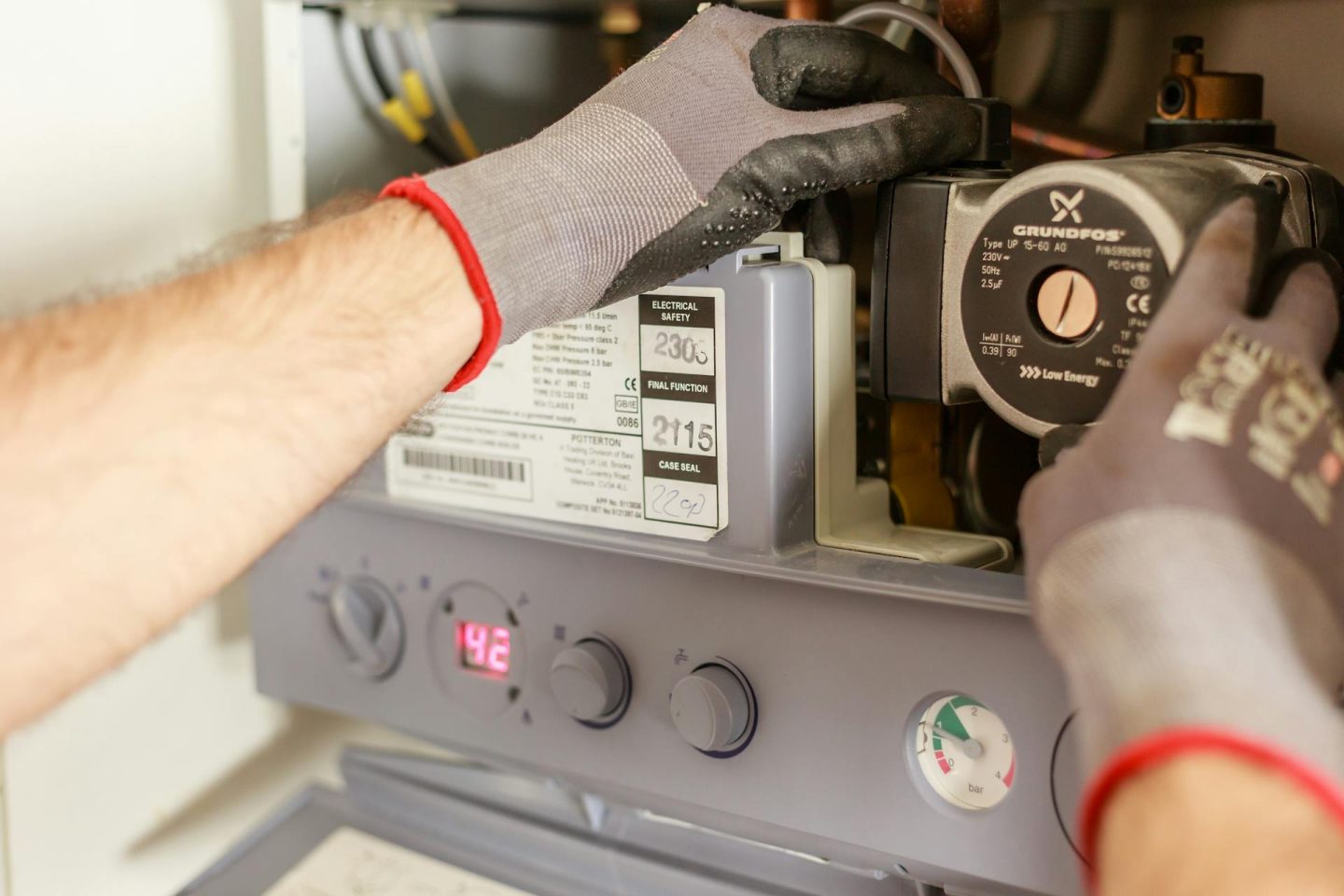
Boilers are the beating heart of your home. They provide hot water and can also work as part of a central heating system that powers different radiators around your house. Like all appliances in your home, boilers are susceptible to issues – if anything, they’re more susceptible than most!
The most common boiler problems revolve around pressure. A boiler uses pressure to pump hot water around your home, and it needs to remain within a “normal” pressure range. This will vary depending on your boiler, but it’s noted in the manufacturer’s handbook. When your boiler pressure drops too low, it stops working properly and can’t push hot water anywhere. You tend to see it dribbling out of taps or showers instead of coming out properly. Or, pressure can get too high, which may result in leaks from the boiler – or worse, an explosion.
It sounds scary, but boiler pressure issues are actually quite easy to fix. Try these DIY “repairs” to solve your problem before you bring in a professional. Who knows, it could help you save a fortune on callout fees!
Adjust The Boiler Pressure
When the pressure is too low, you can increase it by finding the filling loop. This is normally clearly labeled on the boiler and is usually found on its underside. If you’re struggling to locate it, then read the instructor’s manual – there will even be steps on how to increase the pressure.
The next step is to open the valves on the filling loop. This lets cold water into the system and increases the pressure. Monitor the pressure gauge until it reaches the manufacturer’s recommended range (for context, this is normally between 1 and 2 bars).

When the pressure is too high, you can try decreasing it in a couple of ways. The first is to bleed your radiators; you need to turn off the boiler before doing this, and it involves using a radiator key to allow a bit of air/water from individual radiators. This lowers the pressure in the entire central heating system, which returns your boiler to normal.
The second idea is to open a relief valve on your boiler and allow some water/air to escape directly from it. As with the first DIY fix, always be sure to keep an eye on the pressure gauge when decreasing the pressure to avoid turning it too low.
Replace The Relief Valve
If neither of these fixes works, there could be a problem with the relief valve itself. Thankfully, this is still a small DIY fix. Turn off your boiler and then unscrew and remove the current valve, replacing it with a quality Kunkle valve. The new valve should be able to restore your boiler to its ideal pressure reading.
Over time, these valves can break and degrade, which stops them from monitoring the boiler pressure. They can either let too much water/air out, or not enough. A quick replacement should solve the problem – if not, then it’s time to call the experts.
Summary
Most of these fixes are easy for the average person, particularly if you have some DIY experience. However, if you don’t feel comfortable doing these things to your boiler, then that’s okay. Plumbing fixes are sometimes things you shouldn’t do, and there’s no shame in calling a professional. Likewise, if you try the DIY fixes and don’t solve the issue, then you’ll need to bring in a boiler engineer.


